I understand the scepticism. Sound healing sits in a cultural space that makes a lot of people uncomfortable — adjacent to things they associate with incense and crystals and a kind of spirituality they don't share. I get it. I was sceptical too.
But here's what I've observed in hundreds of sessions: the nervous system doesn't require your belief. It responds to sound whether you're a committed meditator or someone who came along because their partner dragged them. The physiology is the physiology.
"You don't need to believe in it. The nervous system doesn't require your permission."
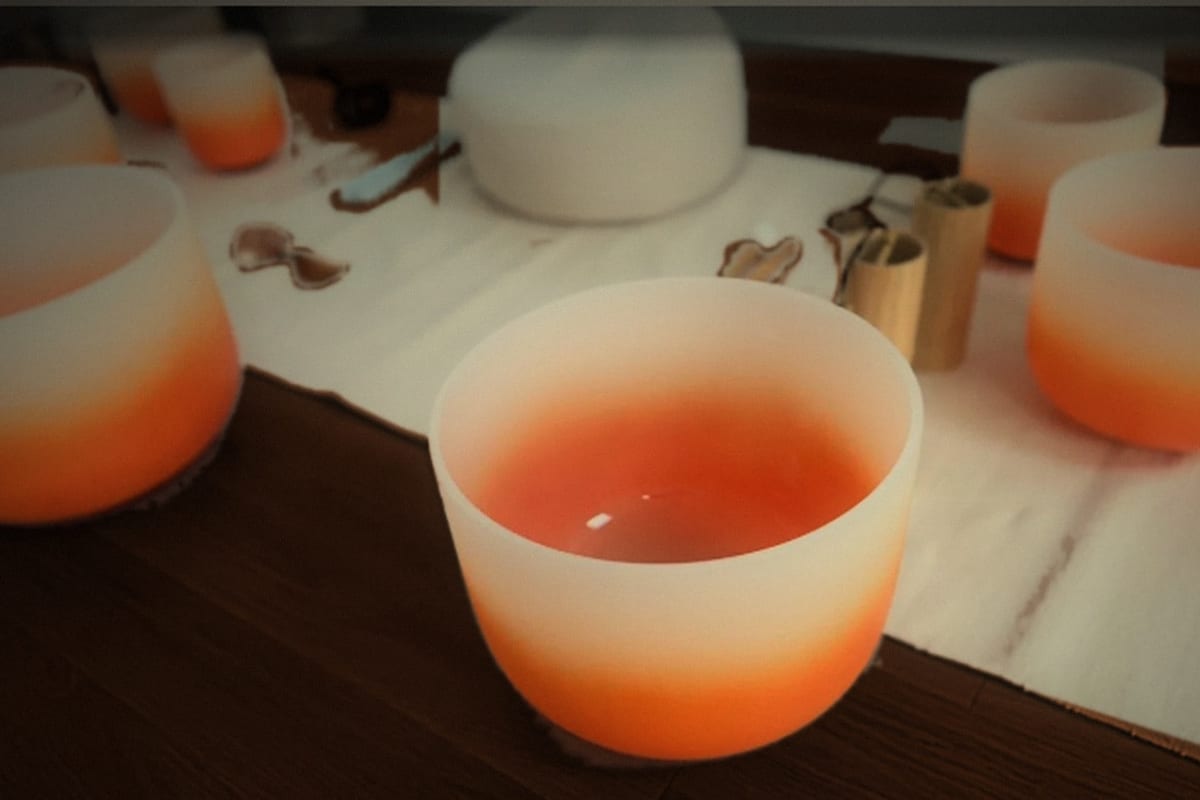
What's actually happening during a sound bath is a process called entrainment — the tendency of the brain's electrical activity to synchronise with external rhythmic stimuli. The slow, resonant frequencies of crystal bowls and gongs encourage the brain to shift from beta waves (alert, analytical) toward alpha and theta states (relaxed, receptive, creative). This is measurable. It's not mystical.
The physical resonance matters too. Sound travels through the body as vibration — and the body is mostly water, which conducts vibration efficiently. People often describe feeling the sound in their chest, their belly, their bones. That's not imagination. That's physics.
What makes the experience feel significant — sometimes profoundly so — is the combination of these effects with the permission to simply lie still and receive. Most of us never do that. We're always doing, processing, managing. A sound bath creates a container in which none of that is required. The sound does the work. You just have to show up.
The integration afterwards is important. We always build in silence after a session — time to lie still before the world comes back in. What people notice in that silence is often the most interesting part: a quality of presence, a sense of having been somewhere and returned, a body that feels different from the one that arrived.
You don't have to understand it. You just have to be willing to lie down.
